
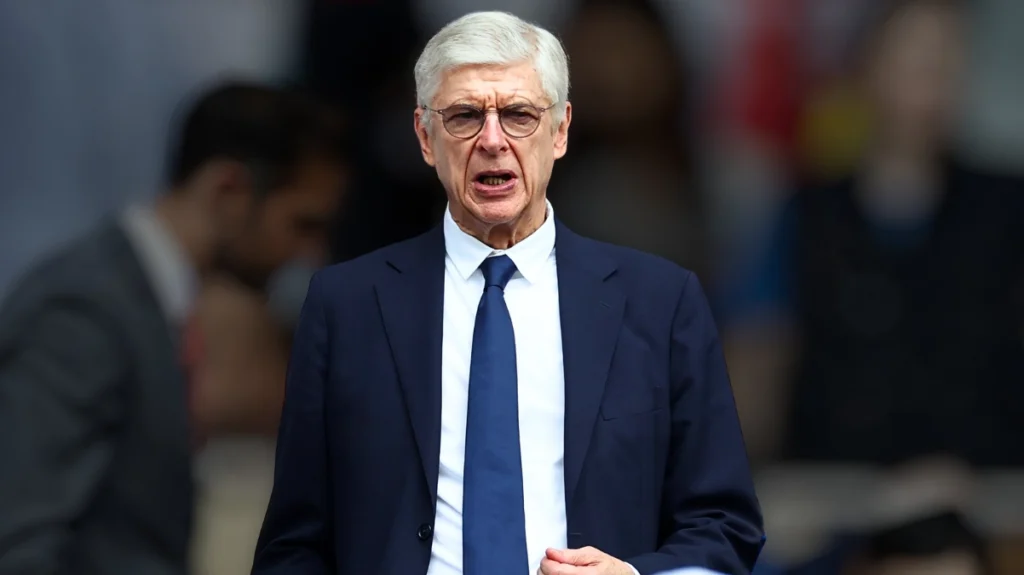
The Athletic reported that Arsene Wenger to make a final decision this week about challenging Gianni Infantino for the FIFA presidency. The former Arsenal manager is reportedly being encouraged to enter the race by influential figures across international soccer.
UEFA is among those apparently lobbying Arsene Wenger to become a candidate before the November 18 deadline. Meanwhile, FIFA’s current leadership faces growing scrutiny following controversial proposals and questions about its governance.
Wenger Weighs Up FIFA Presidential Challenge
The 77-year-old has served as FIFA’s chief of global football development since November 2019. He remains one of the most respected figures in international soccer. Consequently, Wenger could emerge as a serious challenger to Infantino if he decides to stand.
His potential candidacy also coincides with uncertainty about his future at FIFA. Wenger’s current contract expires at the end of 2026. However, the governing body is reportedly keen to extend his stay. That could create a complicated situation if he enters the presidential race. Remaining in a senior FIFA position while campaigning against its president would present obvious challenges. Furthermore, Wenger would probably need to establish an alternative vision for the organisation.
The former Arsenal boss has considerable experience in the game. His reputation extends well beyond his achievements in club management. He spent 22 years managing Arsenal, winning three Premier League titles and seven FA Cups. Therefore, his involvement could attract considerable attention from national associations. His standing within European soccer could also make him an appealing alternative to Infantino.
Infantino Faces Pressure Following Controversial FIFA Proposal
Wenger’s potential challenge comes during a difficult period for Infantino. The FIFA president has faced repeated calls to resign following the controversial FIFA Forward Enterprise (FFE) proposal. The initiative would have allowed private investors to purchase a stake in FIFA’s event and commercial operations. Those assets included the organisation’s lucrative World Cup business. However, the proposal was eventually withdrawn following significant criticism.
Wenger subsequently distanced himself from the initiative. On August 4, he released a statement explaining that he had not been involved in developing the proposal. He also insisted that he knew nothing about it before the media reported on the plans. His statement included a clear defence of FIFA’s independence.
“The decision to withdraw the project was absolutely necessary and beyond question, because I firmly believe in an independent FIFA that serves our game with commitment, transparency, and integrity,” Wenger’s statement added.
His position was particularly notable given his senior responsibilities within FIFA. Wenger was also absent from the FIFA Management Board meeting in Rabat, Morocco, on August 5. That gathering saw the organisation’s leadership publicly rally behind Infantino. Although Wenger’s absence attracted attention, it did not necessarily signal a complete breakdown in their relationship.
Indeed, the pair were pictured together in Baku, Azerbaijan, towards the end of October. They attended the inaugural Under-15s World Cup and Festival. Their appearance together suggested that relations had not completely deteriorated. Nevertheless, Wenger’s potential presidential ambitions could change the dynamic between the two men.
Infantino Retains Support Across Several Confederations
Wenger could be a popular candidate in Europe. He may also attract support from national associations across other confederations. His experience, reputation and knowledge of international soccer could strengthen his campaign. However, defeating Infantino would be an enormous challenge.
The incumbent president retains considerable support across several regions. Africa, the Caribbean, South America and the Middle East remain important sources of backing. Additionally, the Asian Football Confederation has supported Infantino. This international support could make it difficult for any challenger to assemble a winning coalition.
UEFA is therefore reportedly considering its options carefully. The European governing body is not relying exclusively on Wenger becoming available. It has also been speaking to other potential candidates ahead of the November 18 deadline. Any nominee would need approval from UEFA’s Executive Committee. European national associations would also have to discuss and endorse the eventual choice.
That approach reflects the difficulty of challenging an incumbent with extensive international support. UEFA will want to identify someone capable of attracting votes beyond Europe. For anyone following international soccer governance, the presidential race is becoming an increasingly significant story. Although online sports betting may attract attention around major sporting events, the FIFA election will ultimately be decided through national association votes.
Kozo Tashima and Ramon Vega Enter the Presidential Race
Wenger is not the only figure considering a challenge to Infantino. Last week, Japan Football Association president Kozo Tashima announced his intention to contest the FIFA presidency. His announcement came after former Tottenham Hotspur (1.55) defender Ramon Vega declared his candidacy in October.
Tashima’s decision adds another dimension to an increasingly competitive election. His position within Japanese soccer could help him attract support in Asia. However, the backing of a major national association does not guarantee success. Candidates will need to build relationships across the wider international game.
Vega also faces a considerable challenge in attempting to unseat the incumbent. The former Tottenham defender has made his ambitions clear. Nevertheless, the election’s outcome will depend on the support candidates can secure from FIFA’s membership. Wenger would arguably bring a different level of international recognition to the contest.
What Candidates Need to Beat Infantino
The requirements for entering the FIFA presidential election are significant. Prospective candidates must secure endorsements from at least five national associations. Only then can they qualify to contest the presidency, provided they meet the other eligibility requirements.
However, qualifying for the election is only the first hurdle. FIFA has 211 member associations, meaning a candidate needs 106 votes to secure victory. Those votes will be cast at the FIFA Congress in March 2027.
Consequently, any challenger must build a substantial international coalition. European backing alone would probably be insufficient to defeat Infantino. Support from Africa, Asia, South America and other regions could prove decisive. The incumbent’s established relationships across these confederations give him a significant advantage.
Wenger now faces an important decision about whether he wants to enter that contest. His experience and reputation could make him a compelling alternative. Nevertheless, he would need considerable support to turn that appeal into electoral success. With the November 18 deadline approaching, the former Arsenal manager’s next move could reshape the FIFA presidential race.
